

Golfer’s Elbow Treatment With Shockwave Therapy
Golfer’s elbow, medically known as medial epicondylitis, is a common overuse injury that causes pain on the inside of the elbow due to repetitive strain on tendons. At Regenerate Men’s Health, Dr. Alexander Isazade offers advanced, non-invasive solutions such as shockwave therapy to help patients recover faster and return to their daily activities with less discomfort. For more information, contact us or book an appointment online. We are conveniently located at 1776 Ygnacio Valley Rd , Suite 108, Walnut Creek, CA 94598.
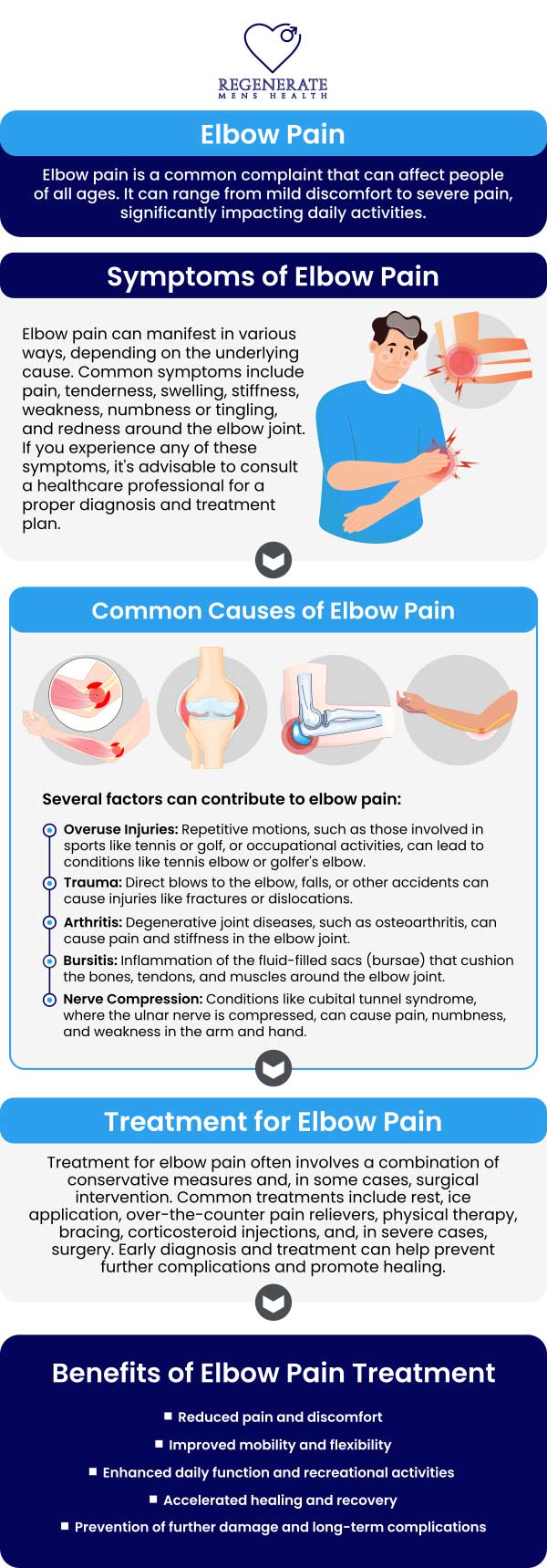
Table of Contents:
What are the symptoms of golfer’s elbow?
How is golfer’s elbow diagnosed?
What are the treatment options for golfer’s elbow?
What are the benefits of using shockwave therapy for golfer’s elbow?
How does Dr. Alexander Isazade treat golfer’s elbow with shockwave therapy?
Golfer’s elbow typically presents with pain and tenderness along the inner side of the elbow. This discomfort may gradually worsen over time, especially with repetitive wrist or forearm movements.
Common symptoms include:
● Pain or burning sensation on the inner elbow
● Stiffness, especially in the morning or after activity
● Weak grip strength
● Pain that worsens with wrist flexion or gripping objects
● Numbness or tingling radiating into the ring and little fingers
These symptoms occur because the tendons that attach the forearm muscles to the elbow become irritated or damaged from overuse. Activities such as golfing, weightlifting, typing, or repetitive manual labor often contribute to this condition.
Diagnosis of golfer’s elbow is typically straightforward and begins with a detailed medical history and physical examination. A provider will evaluate pain location, range of motion, and how symptoms respond to specific movements.
During the exam, the physician may:
● Apply pressure to the inner elbow to identify tenderness
● Ask you to flex your wrist or grip objects to reproduce pain
● Assess strength and flexibility in the forearm
In most cases, imaging is not necessary. However, X-rays or MRI scans may be used to rule out other conditions such as fractures, arthritis, or ligament injuries when symptoms are unclear or persistent .
At Regenerate Men’s Health, Dr. Alexander Isazade uses a precise diagnostic approach to ensure that treatment targets the underlying cause of pain rather than just the symptoms.
Treatment for golfer’s elbow usually begins with conservative, non-surgical approaches. The goal is to reduce inflammation, promote healing, and restore function.
Common treatment options include:
● Rest and activity modification: Avoiding repetitive motions that worsen symptoms
● Ice therapy: Helps reduce inflammation and pain
● Medications: Over-the-counter anti-inflammatory drugs such as ibuprofen
● Bracing: Counterforce braces can reduce strain on tendons
● Physical therapy: Focuses on stretching and strengthening exercises
In more persistent cases, additional therapies may be considered, such as platelet-rich plasma (PRP) injections or advanced modalities like shockwave therapy. Surgery is rarely required and is typically reserved for severe cases that do not respond to conservative care .
At Regenerate Men’s Health, treatment plans are individualized, often combining multiple therapies to optimize recovery.
Shockwave therapy, also known as extracorporeal shockwave therapy (ESWT), is a non-invasive treatment that uses acoustic waves to stimulate healing in damaged tissues. It has become increasingly popular for treating chronic tendon conditions like golfer’s elbow.
Key benefits include:
● Enhanced healing: Shockwaves improve blood flow and stimulate cellular repair mechanisms
● Pain reduction: Helps decrease pain by targeting the affected tendon area
● Non-invasive: No surgery, injections, or downtime required
● Improved function: Can restore strength and mobility over time
Research suggests that shockwave therapy can improve pain and function in elbow tendon conditions, particularly when used as part of a broader rehabilitation plan . It works by promoting microcirculation and accelerating tissue regeneration, which supports long-term recovery .
While results may vary depending on the severity of the condition, many patients experience noticeable improvement after a series of treatments.
At Regenerate Men’s Health, Dr. Alexander Isazade takes a comprehensive and patient-centered approach to treating golfer’s elbow using shockwave therapy.
The treatment process typically includes:
1. Personalized Evaluation
Dr. Isazade begins with a detailed assessment of your symptoms, activity level, and medical history. This ensures an accurate diagnosis and helps determine whether shockwave therapy is appropriate for your condition.
2. Targeted Shockwave Application
During the procedure, a specialized device delivers controlled acoustic waves directly to the affected tendon. These waves stimulate blood flow, break down scar tissue, and trigger the body’s natural healing response.
3. Complementary Therapies
To enhance results, treatment may be combined with:
● Physical therapy exercises
● Stretching and strengthening programs
● Lifestyle and ergonomic adjustments
4. Gradual Recovery Plan
Patients are guided through a structured recovery process to safely return to normal activities while minimizing the risk of reinjury.
Dr. Alexander Isazade focuses on addressing the root cause of tendon dysfunction rather than simply masking pain. His goal is to restore long-term function, reduce recurrence, and help patients regain confidence in their movement.
Golfer’s elbow can be a frustrating and persistent condition, especially when it interferes with daily activities or athletic performance. Fortunately, modern treatments like shockwave therapy offer an effective, non-invasive solution.
At Regenerate Men’s Health, Dr. Alexander Isazade provides advanced care tailored to each patient’s needs. By combining accurate diagnosis, innovative technology, and personalized rehabilitation plans, patients can achieve meaningful relief and long-term recovery without surgery. For more information, contact us or book an appointment online. We are conveniently located at 1776 Ygnacio Valley Rd , Suite 108, Walnut Creek, CA 94598. We serve patients from Walnut Creek CA, Concord CA, Pleasant Hill CA, Alamo CA, Danville CA, Lafayette CA, Orinda CA, and surrounding areas.
Check Out Our 5 Star Reviews




 Send Text
 How May I Help You?